
The Fern That Fights Seizures
How did a small pond fern lead to a medicine for epilepsy in India?
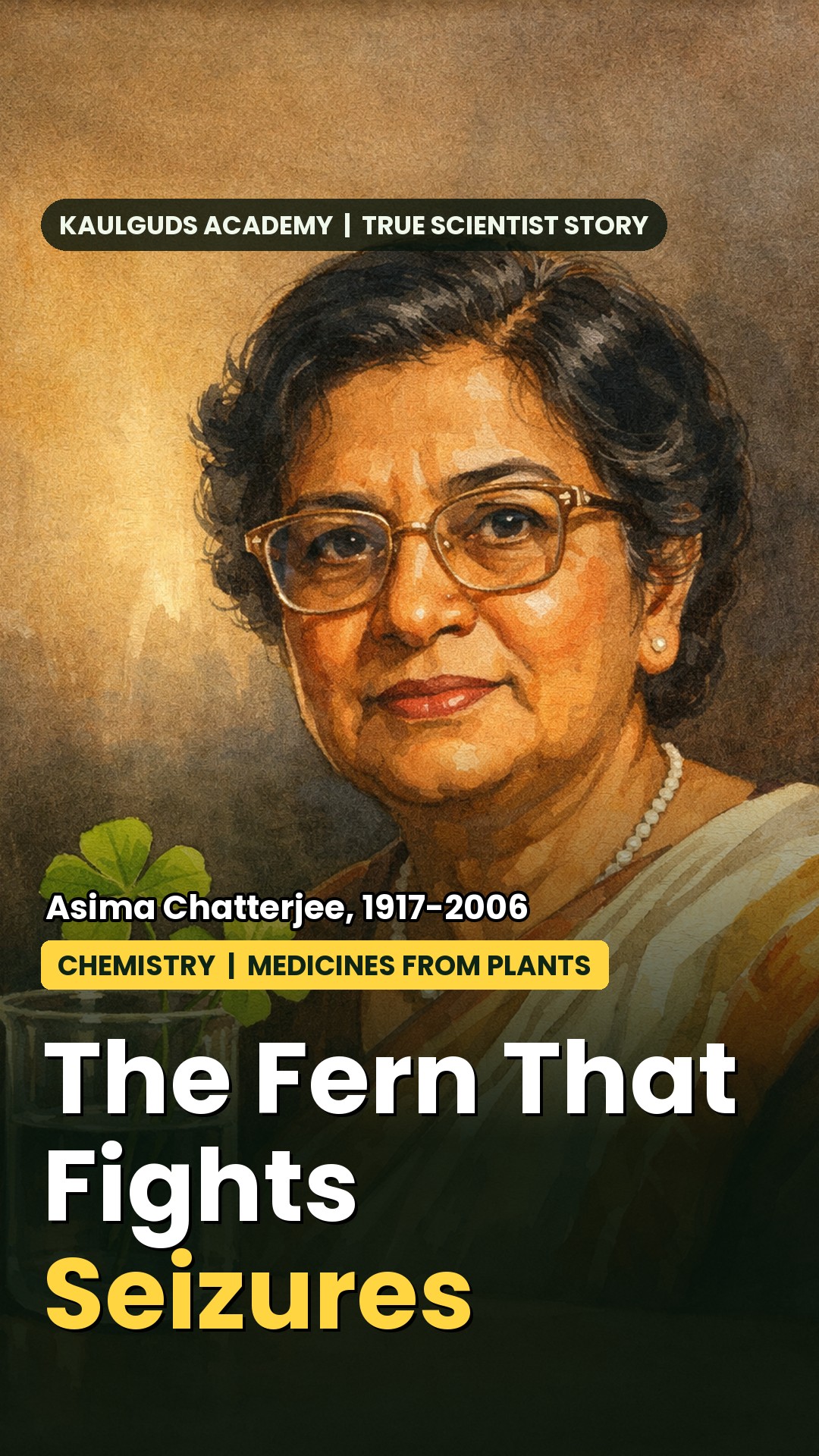
The story
In many parts of India, a small water fern called Marsilea minuta was used as a traditional remedy. In Calcutta, chemist Asima Chatterjee wanted to know what was really inside such medicinal plants. In 1944 she became the first woman to earn a Doctor of Science degree from an Indian university, the University of Calcutta, and she spent her career studying the chemistry of Indian plants. Was there a real, measurable reason a fern could help, or was it only belief? The only way to find out was to isolate the plant's chemicals one by one and test what each could do.
The science
Asima Chatterjee's work on Marsilea minuta led to Ayush-56, an anti-epileptic preparation developed in India. Epilepsy causes seizures, sudden bursts of uncontrolled electrical activity in the brain. Medicines that reduce seizures are called anticonvulsants. Finding them in plants is the work of phytochemistry, the chemistry of plants: extracting natural compounds, working out their structures, and testing their effects. This is how a traditional remedy can be checked scientifically.
Try it
Questions students ask
Who was Asima Chatterjee?
An Indian chemist from Calcutta. In 1944 she became the first woman to earn a Doctor of Science degree from an Indian university, and she worked on the chemistry of medicinal plants.
Which medicine came from her work on the fern?
Ayush-56, an anti-epileptic preparation developed from the water fern Marsilea minuta.
What is phytochemistry?
The chemistry of plants: extracting the natural compounds in a plant, finding their structures and testing what they do.
More science stories
View all stories
The Sweating Scooter Seat
Why is your scooter seat wet at sunrise, even when it has not rained?
The Monsoon Rust Mystery
Why does Riya’s scooter handle turn reddish after one rainy night?
The Dal Colour Secret
Why did Riya’s dal turn red only when a soapy spoon touched it, not with lemon juice?